He bought ‘Maine Pyar Kiya’ on VHS. Now Ultra Media is betting Rs 500 crore on OTT

- March 9, 2026
- Ultra Team
Over four decades, Ultra Media and Entertainment has proven that owning content, rather than just renting distribution, is the ultimate way to build a bulletproof media legacy. Founder Sushilkumar Agrawal’s transformation of a ₹10-lakh VHS gamble into a ₹500-crore OTT empire demonstrates how aggressive IP acquisition outlasts every technological shift
When you trace the arc of a company that began by duplicating tapes and now owns thousands of film titles, what stands out is less the technology and more the choices: the willingness to buy a risky right, the patience to build systems, and the stubborn focus on owning rather than renting value. That is the story of Ultra Media and Entertainment Pvt Ltd under Sushilkumar Agrawal — a man who read a private screening, backed his instinct, and spent the next four decades turning that conviction into a library, platforms and an industrial approach to cultural property.
From chemicals in Bharuch to cassettes in Mumbai
In 1979, Agrawal ran a chemical factory in Bharuch. He moved to Mumbai when he saw the scale of opportunity shifting to electronics. Rather than chase short-term margins, he built operational muscle: assembly lines, duplication racks, distribution relationships. The first plant — a VHS/video cassette facility — was set up in 1983 with a modest ₹10 lakh investment.
Agrawal recalls: “I started a chemical factory in Baruch, Gujarat. Later, I found that there is not much potential in that and I shifted to Mumbai, wherein I found an opportunity in the electronics field, and we started manufacturing and assembling video cassettes. We also started making copies of feature films on VHS. We started this with an initial investment of Rs 10 lakh. During that time, the industry was in its nascent stages of growth, dominated by an unorganised sector and plagued by software piracy. Hence, we saw the potential at that time.”
Operational grounding mattered because it taught Ultra how content moved, how audiences reused films and how distribution scars formed. This insight proved critical when the company stopped just copying and started owning.
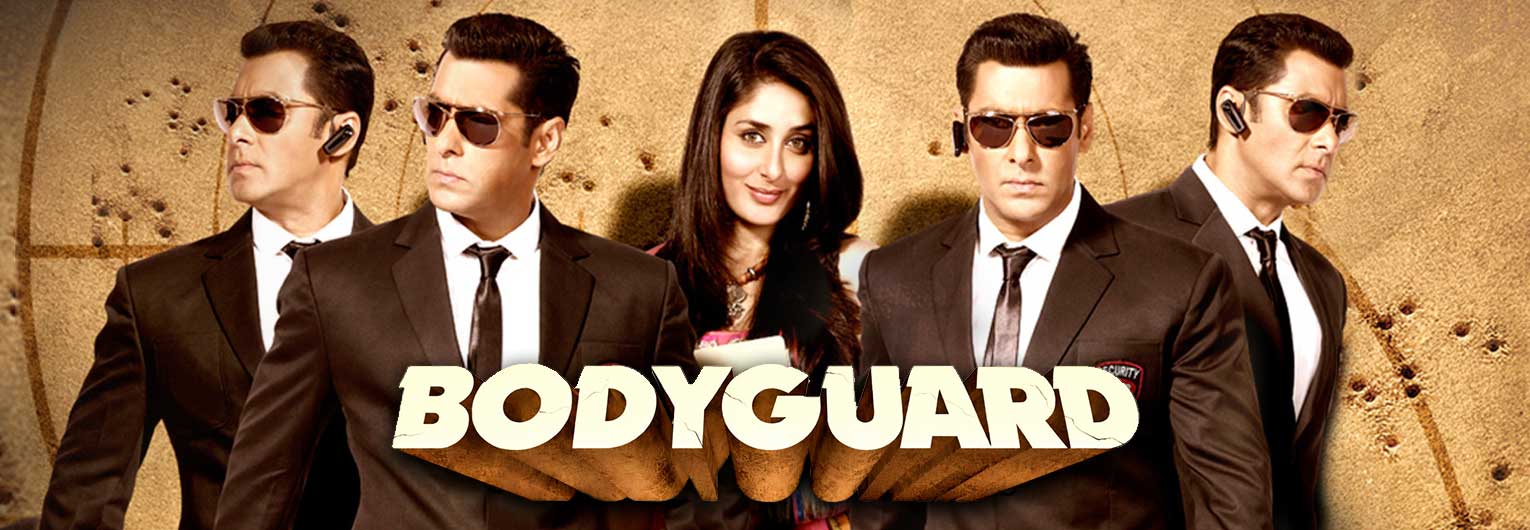
The inflection: buying Maine Pyar Kiya (1989)
Some gambles are calculated; some are instinct. For Agrawal, the decision to acquire the VHS rights to Maine Pyar Kiya in 1989 was both.
“First, we saw the film in a private screening and were confident that it has the potential to be a hit and we need to acquire it at any cost. We knew the Bharjatiya family personally, hence we got the first preference to acquire it. We strategically marketed it in India and as the film itself was such a big hit in the Theatres. There was a spillover audience who wanted to own the VHS copy of the film for themselves, either to view the film for the first time or for repeat viewing. In those days, the film’s VHS was also a huge hit in the VHS circulating library,” explains Agrawal.
Ultra’s marketing instincts were unapologetically practical, even promotional experiments were tactical. Agrawal recounts an unusual move where a portion of the film was shared on tape before theatrical release to whet audience appetite. That risk paid off: a theatrical hit became a home-video phenomenon, and the company’s model shifted from manufacturing boxes to monetising rights.
“Our single major decision was acquiring the VHS rights for the film Maine Pyar Kiya. Post the success of the film, we continued to acquire rights to classic, old, and new films, hence building an enviable catalogue for the company,” Agrawal says as he goes down memory lane.
This further reframed Ultra’s balance sheet with its IP becoming the asset class.
An archive built like an industry
Owning rights means taking responsibility – for restoration, for distribution, for defending value. Ultra’s catalogue grew aggressively across formats and languages. The company’s content stable consists of over 3,500 plus films, 17,500 plus television episodes and 4,000 plus minutes of animation content and across various languages and genres. Its music library consists of more than 25,000+ film and non-film songs.
Music became a parallel engine with Ultra Music now housing vast audio rights that sustain licensing and syndication. The company learned to syndicate not only domestically but globally, selling to OTTs, satellite broadcasters and international distributors.
Ultra didn’t outsource the hardest pieces. It kept restoration, IP enforcement and the legal core close.
“Our company currently employs around 700 people on its rolls. Its Content acquisition and syndication team comprises dedicated buyers and sales staff who source international titles and secure licensing rights for SAARC and global markets. We also have an in-house team that acquires domestic content across various languages and genres… There is a restoration crew handling film restoration, supported by a larger post production unit that manages scanning, colour grading, 2D to 3D conversion, and related services. An in-house legal department oversees copyright registration, anti-piracy litigation, and contract work,” says Agrawal.
This approach helped create a catalogue that can be repackaged in dozens of ways, whether bundled to a DTH operator, licensed to a streaming service, or monetised through ad-supported video platforms.
Owning the storefront: The ₹500-crore OTT wager
Owning content is one thing; owning customers is another. Ultra has chosen the latter. The group’s commitment to build and scale its platforms is explicit and numeric. As distribution shifted from physical formats to digital ecosystems, Ultra chose not just to license its library outward but to build its own consumer-facing platforms — launching three dedicated OTT apps: Ultra Play for classic and curated cinema, Ultra Gaane for its expansive music catalogue, and Ultra Jhakaas for Marathi entertainment.
“In total, the investment in all the three apps is Rs 500 crore over the next 5 years,” points out Agrawal.
Regional depth is the first test. Ultra Jhakaas, the Marathi platform, is already a packed repository.
“The platform has around 1500 + titles and more than 6000 hours of Marathi movies, series, music, kid shows and dubbed content. To date, the app has been downloaded on 9 lakh platforms. It is viewed in more than 378 cities and towns in Maharashtra,” says Agrawal.
By bundling content with established distributors, Ultra fast-tracks reach: recent partnerships bundled Ultra Play and Ultra Jhakaas into Tata Play Binge and other pay-TV packages, placing legacy and regional content in front of millions overnight. That mix of catalogue monetisation plus targeted originals is how Ultra aims to stitch licensing revenue with subscription and advertising.
Technology as spine, not spectacle
A library needs care. Ultra digitises with Arriscan scanners and runs an internal restoration team. It also adopts AI where it accelerates value by upscaling, noise reduction, automated metadata and faster localisation.
“For the digitisation of the content, we use Arriscan Scanning Technology. For content restoration, we use various available software’s in the market. Also, we have our own team of skilled, dedicated technicians who execute all the Post Production and Studio projects internally,” pointed out Agrawal.
He further emphasises: “AI is reshaping Ultra Media’s pipeline from end to end. In restoration, AI driven upscaling, noise reduction and frame interpolation will let our restoration crew turn grainy archives into 4K ready masters in a fraction of the time, freeing staff to focus on artistic decisions rather than manual clean up. In metadata and discovery, the machine learning taggers will automatically generate scene level keywords, descriptions and content summaries, boosting searchability across Ultra’s complete film library and feeding its OTT content and recommendation engines.”
Equally important is defending that value. Ultra registers every asset, deploys DRM, digital watermarking, fingerprinting and AI crawlers that hunt piracy and automate takedowns.
“Our company treats copyright as the core of its business model, so it registers every film, music, and digital asset with the Indian Copyright Office to lock in clear ownership evidence. On the technical side, Ultra Media rolled out DRM encryption, digital watermarking and content identification (fingerprinting) tools to track leaks, while AI driven web crawlers scan for infringing copies and automatically issue takedown notices,” explains Agrawal.
Mintage World and collector’s mind
Not everything at Ultra is about screens. Agrawal’s Mintage World is an expression of the same temperament that built the film library: cataloguing, preserving and making cultural assets discoverable.
“Mintage World is the world’s first online museum for ancient and modern coins, stamps and currency banknotes. It was launched with an objective of reintroducing the joy and fun of collecting coins, banknotes and stamps to the modern world’s young and old generation alike. Currently, visitors can get detailed and catalogued information and a virtual access to more than 150,000 coins, stamps and currency notes from India and worldwide,” says Agrawal.
Books, accessories, YouTube channels, e-commerce sales – the project is as much educational as it is commercial. It’s a reminder that owning things responsibly can be a public good.
Playbook for next founders
After more than four decades of navigating piracy wars, format shifts, technological revolutions and platform disruptions, Agrawal’s perspective carries the weight of lived cycles. He has seen VHS rise and vanish, DVDs peak and decline, satellite explode, YouTube democratise distribution, and OTT redraw the economics of entertainment. Through each wave, he did not chase trends — he acquired assets.
His advice, therefore, is not motivational rhetoric. It is distilled experience.
“A strategic lesson for SME founders would be to lock into their core IP early—register every creation, embed it in a scalable distribution platform, and treat that IP as the central asset that fuels both product development and revenue streams. That single focus turns a small venture into a defensible, high value enterprise,” asserts Agarwal.
It sounds simple. It isn’t.
Locking into IP early requires conviction when capital is scarce. Registering everything requires discipline when speed tempts shortcuts. Building distribution alongside content demands patience in an era obsessed with virality.
But that discipline is precisely what turned a ₹10-lakh VHS facility in 1983 into a rights library of 3,500+ films, 17,500+ television episodes, 25,000+ songs, three OTT platforms and a ₹500-crore digital wager on the future.
Formats will continue to change. Artificial intelligence will compress production timelines. Platforms will merge, fragment and reinvent themselves. Audiences will migrate again.
Yet one thing remains stubbornly durable: ownership.
Ultra’s journey is not merely the story of a media company scaling. It is the story of a businessman who understood early that in entertainment, distribution power fluctuates but intellectual property compounds.
And that, more than any single film, format or platform, is the real legacy Sushilkumar Agrawal has built.