What drew today’s marketing leaders to a profession that never stops changing
- May 27, 2026
- Ultra Team
On World Marketing Day, marketers across industries reflect on what drew them to marketing, how the profession has evolved, and what it means to build brands in an AI-driven world.
“You can learn marketing in a week, but it takes a lifetime to master,” Philip Kotler once wrote. “After fifty years of teaching marketing, I am still trying to master it. Do not be fooled by my title, ‘Father of Modern Marketing.’ If I stop following the latest developments and ideas, my marketing knowledge will quickly lose value.”
That admission captures something true about the profession itself. Marketing has never been a discipline you finish learning. When Kotler began teaching at Northwestern’s Kellogg School of Management in 1960, the job was about deciding the product’s features, finding distribution, hiring an agency, and running a sales force. Creativity mattered, instinct mattered, and the consumer was largely spoken to, not listened to. Ten years ago, marketers were still finding their footing in digital, learning to read conversion funnels and social media metrics as a first language.
Today, in 2026, the same marketer is expected to work alongside AI tools that generate content, predict behaviour, and personalise communication at a scale no human team could previously manage, while simultaneously making sense of data that would have been unimaginable to the profession a generation ago. The pace of change can make a marketer resilient as they adapt.
And yet, through every wave of disruption, Kotler’s 4Ps have held. Product, price, place, promotion: the framework remains the skeleton beneath every campaign and every brand decision, however sophisticated the tools around it have become. Because at its foundation, marketing has always been about understanding the consumer, and that has never been a technology problem.
What draws people to this profession, and what keeps the best ones in it, is curiosity, not about platforms or algorithms, but about people. Why do certain brands become part of culture while others disappear? Why does one campaign create a memory and another create nothing? What does a consumer actually need, beneath what they say they want? These are the questions that pull someone toward marketing in the first place, and the ones who stay close to those questions and become genuinely involved in a brand’s communication are the ones who end up creating something lasting.
This quality is what the profession is built on. It is also what the European Marketing Confederation chose to celebrate when it unanimously designated May 27 as the International Day of Marketing, a day to highlight the importance of marketing in business and society, and to mark pride in a profession that shapes how the world communicates, buys, and connects. May 27 was chosen because it was on this day in 1931, in Chicago, that Philip Kotler was born, the professor, practitioner, and theorist who has written more than 80 books and had an enormous influence on how marketing is understood and practised worldwide.
Kotler’s central lesson, distilled across decades, is that marketing is not about pushing products but about creating value for the customer, that brand trust is itself a form of value, and that the consumer must sit at the centre of every decision. He also warned, from his own experience, that expertise in this field has a short shelf life, and the only antidote is to keep learning.
To mark this year’s World Marketing Day, we spoke to marketers across categories, including FMCG, real estate, retail, financial services, and appliances, about what inspired them to enter the profession and what they believe it means to be a marketer today.
Edited Excerpts:
Brinda Agrawal, Head of Product Development and Chief Marketing Officer, Ultra Soft Toys

Brinda Agrawal
I think my journey into marketing started the same way many Bollywood obsessions do, by being completely hooked to movie promotions. I was fascinated by how films weren’t just released; they were marketed like events. From iconic trailers and dramatic teaser drops to brand collaborations and catchy campaign lines, I loved seeing how the marketing around a film could become as entertaining as the film itself.
What excited me most was that in Bollywood, marketing has always had its own cinematic flair. Sometimes an ad campaign creates the first whistle-worthy moment before audiences even enter the theatre. That blend of storytelling, emotion, glamour, audience psychology, and creativity is what pulled me into film and brand marketing.
Today, being a marketer feels a lot like being a film director. You’re constantly trying to understand your audience, capture attention within seconds, create emotion, and leave people wanting more. The platforms may keep changing, from television promos to reels and meme culture, but the core remains the same: people connect with stories and moments that make them feel something.
Especially in entertainment marketing, I believe audiences today don’t just want campaigns; they want experiences they can participate in. A great campaign now becomes a conversation, a trend, a meme, or even part of pop culture. And that’s what makes marketing so exciting to me even today, the ability to turn a project into a feeling people remember long after the campaign is over
Apeksha Gupta, Chief Marketing & Growth Officer, Galeries Lafayette (Aditya Birla Fashion and Retail Ltd.)

Apeksha Gupta
I actually started my career in advertising. Very early on, I realised that while advertising is fantastic for storytelling and creativity, it’s still only one part of the larger puzzle. That curiosity and perhaps dissatisfaction with not understanding the full spectrum is what pushed me toward marketing.
Today, though, being a marketer is far more demanding than it used to be. For the first 15 or 20 years of many careers, change happened at a manageable pace. But now, the speed of change is extraordinary, and marketers constantly need to work hard to stay relevant. There’s also an interesting dichotomy. As you gain more experience, you become wiser, but you can also start drifting away from younger audiences.
So marketers need to remain agile and constantly find ways to stay connected to evolving consumer mindsets. At the same time, I think the industry sometimes overcorrects in its obsession with Gen Z, AI and newness. Experience still matters immensely. There’s tremendous value in the maturity and perspective that experienced marketers bring.
Marketing is not just communication. Marketing is ultimately a business solution function. That balance between experience and agility is what modern marketers need to master.
Avi Kumar, CMO, FNP

Avi Kumar
I got into marketing because it sat at the intersection of storytelling and analytics – two things I’ve always been deeply drawn to. While studying electronics engineering, I realised I was far more excited by building brands, shaping perception, and creating narratives than by circuits themselves.
Today, marketing for me is no longer just communication; it’s understanding culture, consumer behaviour, technology, and data together, with the consumer always at the centre.
What makes modern marketing exciting is that it’s both art and science. One moment you’re building emotion and storytelling, and the next you’re looking at AI, analytics, conversion, and business impact.
Cherryn Dogra, CMO, Bharti Real Estate
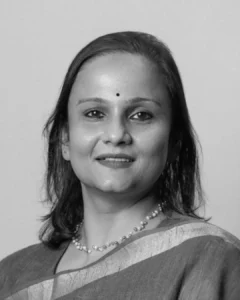
Cherryn Dogra
I got into marketing because I saw early on that revenue and reputation are the same thing. You can’t grow one without earning the other. Marketing wasn’t just ads to me, rather it was the discipline of turning a brand promise into measurable business results.
Today, after 22 years, being a marketer means unlearning 80% of what used to work. In commercial real estate, you can’t trick people into loving a space. You’ve got to earn it through seamless digital journeys, human-centric design, and operational rigour behind the scenes.
Technology has changed everything. I’ve led digital transformations that automated processes and re-engineered end-to-end customer experience. But here’s what hasn’t changed: experience and empathy. Not as buzzwords, but as a discipline. Because when you’re developing offices or retail destinations, you’re not just filling square feet. You’re shaping where people spend ten hours of their day or even beyond as an important part of their unwinding time.
So what does being a marketer mean to me now? Holding two things together without flinching: the rigour of a CFO, because every rupee must drive growth, and the curiosity of a founder, because the landscape changes weekly, not yearly.
Anyone can tell a story. My job is to make sure that the story delivers top lines, loyalty, and transformation. That’s what got me in. That’s what keeps me here.
Chetan Pimpalkhute, Head Marketing, Freedom Healthy Cooking Oils
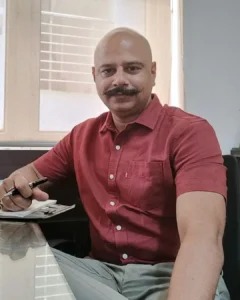
Chetan Pimpalkhute
Marketing drew me in because of its ability to connect brands with people in a meaningful and lasting way. I was always fascinated by how communication can influence consumer choices, build trust and make a real impact on everyday lives. Over the years, the industry has evolved rapidly, with consumers becoming more aware, informed and value-conscious than ever before. Today, being a marketer is not just about creating campaigns or driving visibility, but about understanding changing consumer needs and building authentic connections through relevant and purposeful communication. In categories like healthy cooking oils, this responsibility becomes even more important as consumers actively seek healthier lifestyle choices for their families.
Karan Kumar, Chief Marketing Officer, Hero Realty

Karan Kumar
Having spent over 25 years in marketing & business building, what continues to fascinate me most is its ability to mirror and influence human behaviour in real time. I was drawn to the industry because it goes far beyond advertising; it sits at the intersection of culture, psychology, creativity, and business strategy. The power of brands to shape perception, spark aspiration, and create emotional relevance has always made marketing an incredibly dynamic space to be part of.
Today, the landscape is evolving faster than ever. Consumers are more informed, attention spans are fragmented, and technology, particularly AI, is fundamentally reshaping how brands communicate and engage at scale. In such an environment, authenticity, trust, and consistency have become critical differentiators. To me, being a marketer today is no longer just about building campaigns; it is about understanding shifting consumer mindsets, creating meaningful brand experiences, and driving long-term relevance in an increasingly complex and connected world.
Mohit Rathi, Vice President – Growth, Porter

Mohit Rathi
Honestly, there was never a grand plan to get into marketing. I’ve always seen myself more as a growth generalist, with marketing being an important component. Ironically, marketing was probably the one subject that wasn’t my strongest suit, but what genuinely interested me was understanding businesses and figuring out how to solve for growth.
Joining my current company gave me the opportunity to work on growth across very different stages of the company’s evolution, from building early adoption and category awareness to scaling across markets, customer segments, and new service lines. Every phase came with a completely different set of challenges and required learning from the ground realities of the business.
That continuous process of growing business, adapting, and building for scale is what continues to excite me even today.
At its core, I think a marketer’s role is to deeply understand and obsess over the user problem. That could mean improving the product experience, communication, pricing, service quality, or anything else that genuinely solves a customer need. Strong marketing, ultimately, is about building trust and creating real value for the customer. If that is done consistently, growth naturally follows.
Puneet Das, Chief Marketing Officer, Britannia Industries

Puneet Das
I think what got me into marketing was my curiosity about people and their behaviour. I was always fascinated by why certain brands became part of culture, conversations and memories while others didn’t.
Today, a marketer needs to have the creativity to imagine change and the agility to respond to it. Marketing today is less about controlling the narrative and more about participating meaningfully in evolving conversations.
Pooja Baid, Chief Marketing Officer, Versuni India

Pooja Baid
What got me into marketing was the opportunity to influence both consumer behaviour and business growth simultaneously. I’ve always been fascinated by how strong brands create emotional relevance while driving measurable impact. Today, being a marketer means far more than building campaigns. It’s about understanding culture, consumer shifts, technology, and commerce together. In a rapidly evolving landscape, a marketer must balance creativity with accountability, build long-term brand preference, and ensure every investment contributes meaningfully to business outcomes.
Ruchi Mann, CMO, PwC India
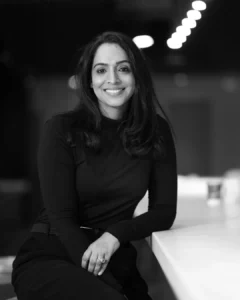
Ruchi Mann
I got into marketing because I loved watching advertisements as a kid. I was always curious about what makes people connect with a brand and its story. As I learnt more about marketing, I realised that I loved the art of building a brand. The blend of creativity and strategy it offered, along with its ability to influence not just perception but business outcomes, is what primarily drew me to it.
Today, in a world driven by information overload and rapidly evolving technology, being a marketer means being a storyteller, a listener, and a custodian of trust. Especially in B2B, it’s no longer only about campaigns. It’s about creating conversations, building communities, and helping businesses engage meaningfully with the whole ecosystem of clients, policymakers, talent, and society at large. Technology, especially AI, may have radically transformed the way we communicate, but the fundamentals remain the same: authenticity, trust, and relevance.
What excites me most is that marketing today sits at the intersection of business, technology, policy, culture, and purpose, and for me, that makes the role incredibly dynamic and impactful.
Ruchika Malhan Varma, Chief Marketing, Customer & Impact Officer, Generali Central Insurance
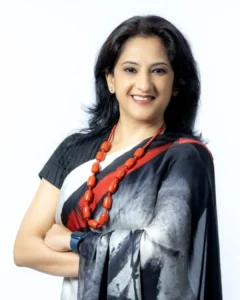
Ruchika Malhan Varma
I gravitated towards marketing early on because I was fascinated by what makes people connect with an idea, a brand or an experience. The combination of creativity, consumer psychology and business strategy always felt naturally exciting to me – no surprises that marketing was my favourite subject in business school.
In college, I experimented with creating and selling college-branded merchandise, which gave me my first real exposure to building something creatively, understanding what people value and finding ways to market it creatively. Every summer used to be spent working on the floor of consumer retail brands to get firsthand insight into consumer behaviour — what captures attention, builds trust and drives decisions.
Looking back, what has consistently stayed with me is a curiosity about people and culture, and how brands can create meaningful impact. That’s what continues to excite me about marketing today — the ability to combine insight, creativity and strategy to shape perception, influence culture, and drive business growth.
Two decades or so ago, the role of marketing was easy to define. It was largely looked upon as a tool of communication to inform customers about products. Today, marketing is one of the most strategic functions in business. And the role of the marketer is driving not just communication, but business growth and enterprise leadership.
Marketing is no longer just about selling products or driving visibility. It is about making a brand relevant by building trust with the customers.
The modern marketer connects what a brand stands for and what people truly need. To do this successfully, the marketer has to build a relationship with the consumer on a personal and deeply emotional level. There is no room for superficial or temporary engagement. The ability to build authentic, meaningful and measurable consumer relationships is the biggest tool in the modern marketer’s arsenal.
But we must also remember that in 2026, we live in a world of endless choices, constant connectivity, and instant gratification. This automatically makes modern marketing a highly personalised, data-driven, and customer-focused discipline.
As a modern marketer, I find myself at a crossroad where human insight, creativity, analytics, and technology meet – and each demands equal attention. The challenge is to bring all four together in a way that creates meaningful impact.
Rahul Ralhan, VP Marketing, Housing.com

Rahul Ralhan
To me, being a marketer means understanding people before selling to them. It means shaping perception through stories that create trust, emotion, and lasting connection. Marketing is not merely about visibility or campaigns; it is about making brands meaningful in people’s lives. In an age of AI and constant change, I see the role of a marketer as someone who blends technology with human insight – using innovation to democratise storytelling while keeping authenticity at the centre. A marketer’s real responsibility is not just to drive growth, but to build belief. Because products can be copied, prices can be matched, but a brand that truly lives in the consumer’s mind becomes enduring.
Swati Rathi, Head of Marketing, Appliances Business, Godrej Enterprises Group
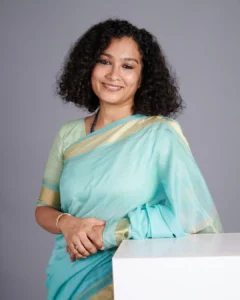
Swati Rathi
My stint in consumer research led me to marketing and paved the way for what is today termed consumer obsession. Being a marketer after all these years still means the same to me in essence – being focused on the consumer, wearing the consumer hat while making every decision, whether it’s evaluating a new product feature or choosing the copy that goes on a social media post or deciding the sales pitch. The touch points can multiply, the cultural context can change, the complexity can increase manifold, but a laser-sharp focus on the consumer can help navigate any landscape.
Shaifali Gautam, CMO, CaratLane

Shaifali Gautam
What drew me to marketing was its ability to shape culture, influence emotions, and create genuine human connections through storytelling. I’ve always found it fascinating how brands can become a meaningful part of people’s lives beyond just the product they sell. Today, marketing has evolved far beyond campaigns — with digital, data, and technology reshaping consumer journeys in real time, marketers are now driving not just brand building, but growth, experience, and culture. To me, being a marketer today means staying deeply customer-obsessed, culturally relevant, and digitally agile, while constantly balancing creativity with sharp business outcomes.